Introduction
Running a successful Forex brokerage involves much more than offering competitive spreads or a reliable trading platform. As your client base grows, managing leads, onboarding traders, handling compliance, supporting Introducing Brokers (IBs), and tracking deposits can quickly become overwhelming without the right systems in place.
This is where a modern Forex CRM becomes essential.
A CRM designed specifically for brokerages helps automate operations, improve client experience, and enable your team to focus on growth instead of repetitive administrative tasks.
What Is a Forex CRM?
A Forex CRM is a centralized platform built for brokers to manage every stage of the customer journey—from the first website inquiry to account verification, deposits, trading activity, and ongoing support.
Unlike generic CRM software, a brokerage CRM integrates directly with trading platforms like MT4 and MT5 while supporting financial workflows such as KYC, wallet management, partner commissions, and compliance.
Common Challenges Brokers Face
Many growing brokerages experience operational bottlenecks, including:
- Manual client onboarding
- Delayed KYC verification
- Poor lead tracking
- Multiple disconnected systems
- Slow customer support
- Difficulty managing affiliate partners
- Limited reporting and analytics
These inefficiencies reduce productivity and can negatively affect client retention.
Essential Features of a Modern Forex CRM
Automated Client Onboarding
Allow traders to register online, verify their identity, upload required documents, and open trading accounts through a streamlined process.
Automation reduces delays and improves the overall client experience.
Integrated KYC & Compliance
Compliance is a critical part of brokerage operations.
A modern CRM should support:
- Document uploads
- Identity verification
- Approval workflows
- Compliance status tracking
- Audit logs
This simplifies regulatory processes while reducing manual effort.
MT4 & MT5 Integration
Direct integration with trading platforms allows brokers to synchronize:
- Trading accounts
- Balances
- Equity
- Open positions
- Deposits
- Withdrawals
Real-time synchronization ensures both clients and administrators always have accurate information.
Lead Management
Every visitor is a potential customer.
A brokerage CRM helps your sales team:
- Capture leads
- Assign sales representatives
- Track communication
- Schedule follow-ups
- Monitor conversion rates
This creates a more organized and efficient sales pipeline.
Introducing Broker (IB) Management
Partner programs play a major role in brokerage growth.
A dedicated CRM should provide:
- Referral tracking
- Commission calculations
- Performance dashboards
- Multi-level IB structures
- Automated payouts
Managing partners becomes significantly easier with centralized reporting.
Client Wallet & Payment Management
Clients expect fast and secure transactions.
A Forex CRM should support:
- Multiple payment gateways
- Deposit management
- Withdrawal requests
- Internal transfers
- Transaction history
Providing a seamless payment experience helps improve customer satisfaction.
Support Ticket System
Instead of relying on scattered email conversations, brokers can centralize customer support using an integrated help desk.
Benefits include:
- Faster response times
- Ticket prioritization
- Internal notes
- Status tracking
- Performance reporting
Why Automation Matters
Manual processes slow business growth.
Automation allows brokerages to:
- Reduce operational costs
- Eliminate repetitive tasks
- Improve response times
- Increase conversion rates
- Minimize human error
This enables teams to focus on acquiring and retaining clients.
Data-Driven Decision Making
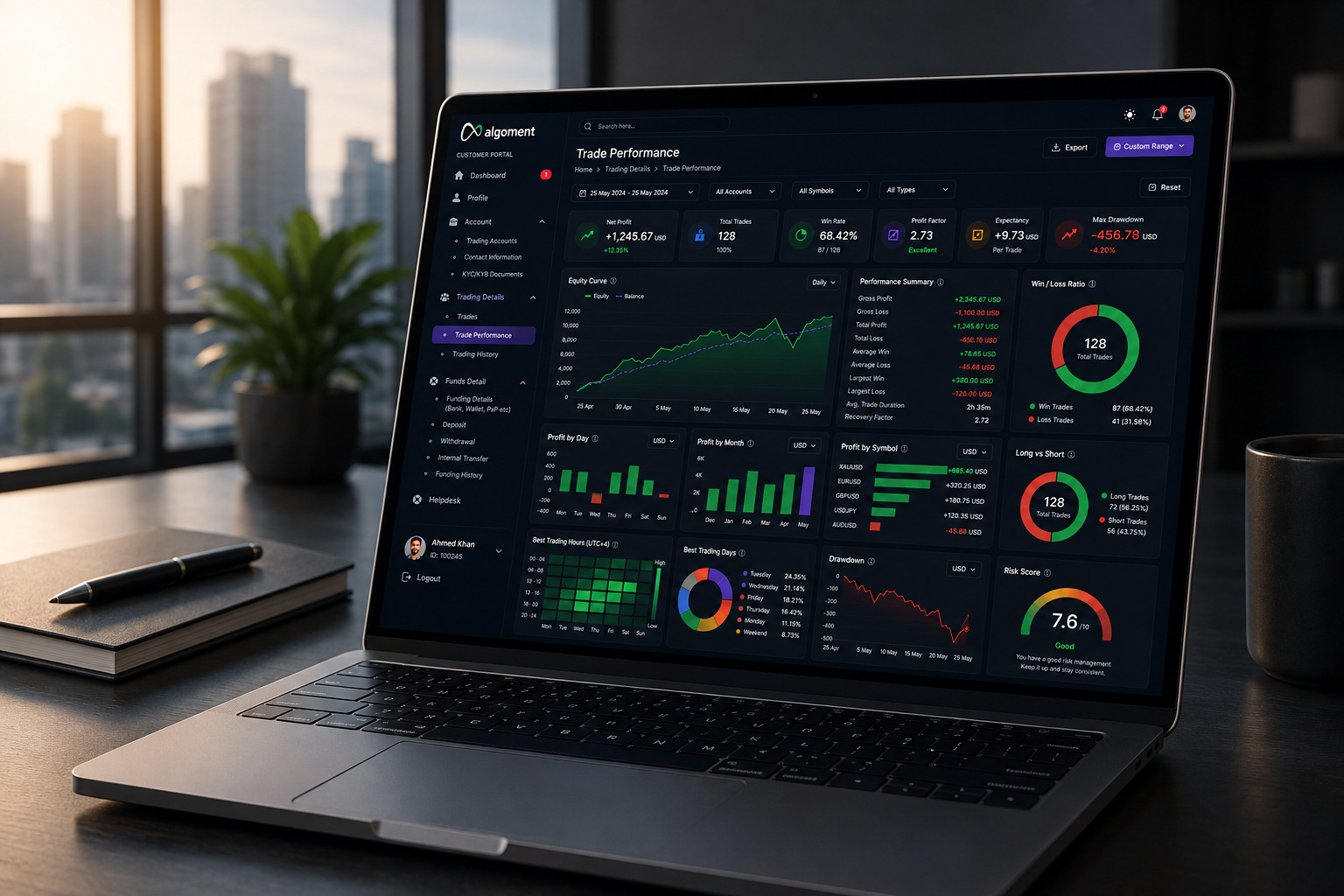
A modern CRM provides dashboards and analytics that help brokers understand:
- Client acquisition channels
- Deposit trends
- Trading activity
- Sales performance
- Revenue growth
- Client retention
With better insights, management can make faster and more informed business decisions.
Scalability for Growing Brokerages
As your brokerage expands into new markets, your technology should grow with you.
A scalable CRM supports:
- Multiple brands
- Multiple MT4/MT5 servers
- Multi-language interfaces
- Multi-currency operations
- Role-based permissions
- API integrations
This flexibility ensures your infrastructure can adapt as your business evolves.
How Algoment Helps Brokers
At Algoment, we develop brokerage technology that simplifies operations and supports long-term growth.
Our Broker CRM is designed specifically for Forex and CFD brokers, offering:
- Seamless MT4 & MT5 integration
- Automated client onboarding
- Built-in KYC workflows
- Payment and wallet management
- IB and affiliate management
- Real-time dashboards
- Secure API architecture
- Customizable workflows
Whether you’re launching a new brokerage or upgrading an existing platform, our CRM provides the tools needed to operate more efficiently.
Final Thoughts
Technology has become one of the biggest competitive advantages in the brokerage industry.
A modern Forex CRM not only improves operational efficiency but also enhances client experience, strengthens compliance, and supports sustainable growth.
Investing in the right CRM today helps your brokerage stay competitive in an increasingly digital financial market.
If you’re looking for a scalable CRM solution tailored to Forex brokers, Algoment can help you build the technology foundation for future success.